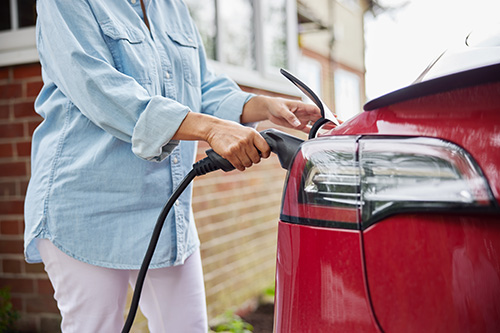
What is bidirectional charging and why might you want to consider installing it at your home?
If you’re driving an EV, installing an EV charger at home is for most, an easy decision to make. You don’t have to rely on the availability of charging stations nearby or lament the lack of availability. It’s a matter of convenience. You can ensure your vehicle is capable of being charged where you probably park it the most.
But if your vehicle is compatible, you may want to consider installing a bidirectional charger at your home. Bidirectional chargers are exactly what they sound like. You can charge your car via your home’s connection to the electrical grid, and likewise, you can also supply power back to your home via your car.
Power outages from storm damage can last a long time (hours to days, depending on the severity of the damage). Far more common are power outages related to equipment failure. These usually last only a few hours. If you’re working from home, the weather is hot or cold enough to require air conditioning or heat or you just find the thought of spending a morning or afternoon without electricity less than ideal, a power outage of a few hours can seem like an eternity.
Bidirectional EV chargers allow you to use the significant power available in your vehicle’s battery system to run your home. Of course, the greater the load your home requires, the less time you’ll have. And depending on your available battery power and the size of your home, you may not be able to run all systems in your home or run them all at once.
If you’re considering an EV charger and would like to learn more about the ability to use your EV as a backup generator for your home via bidirectional charging, please give is a call.